When Florida Law Waives the Local Tree Permit
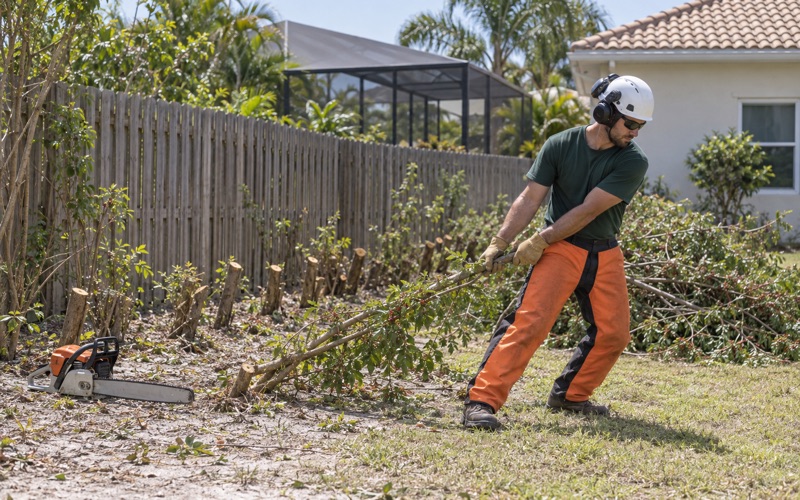
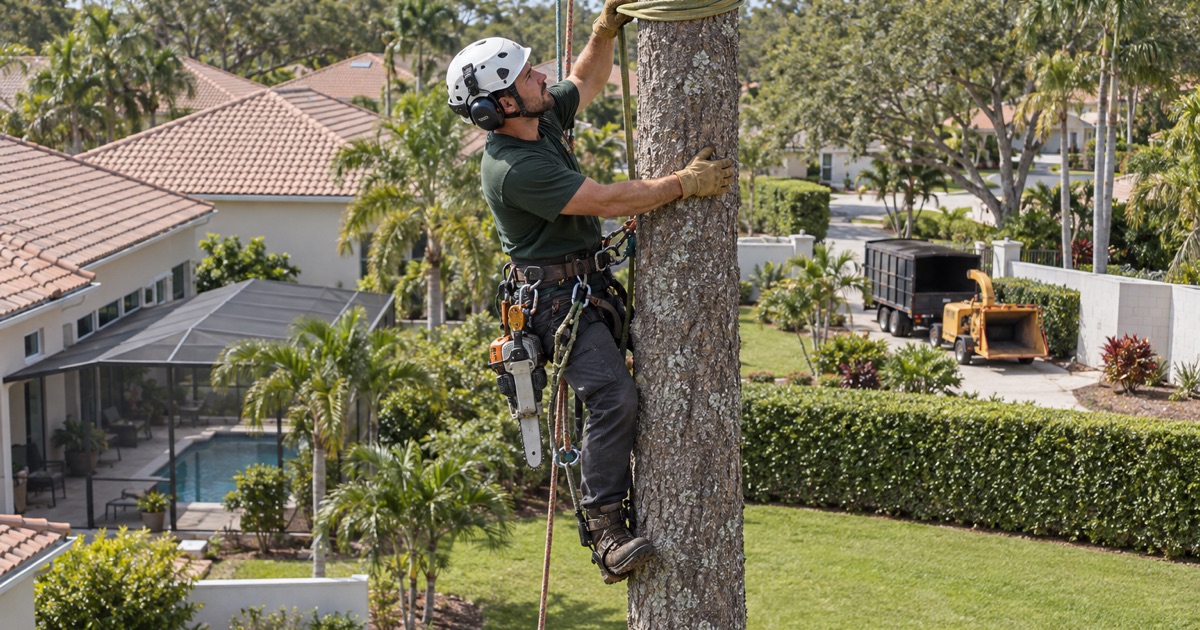
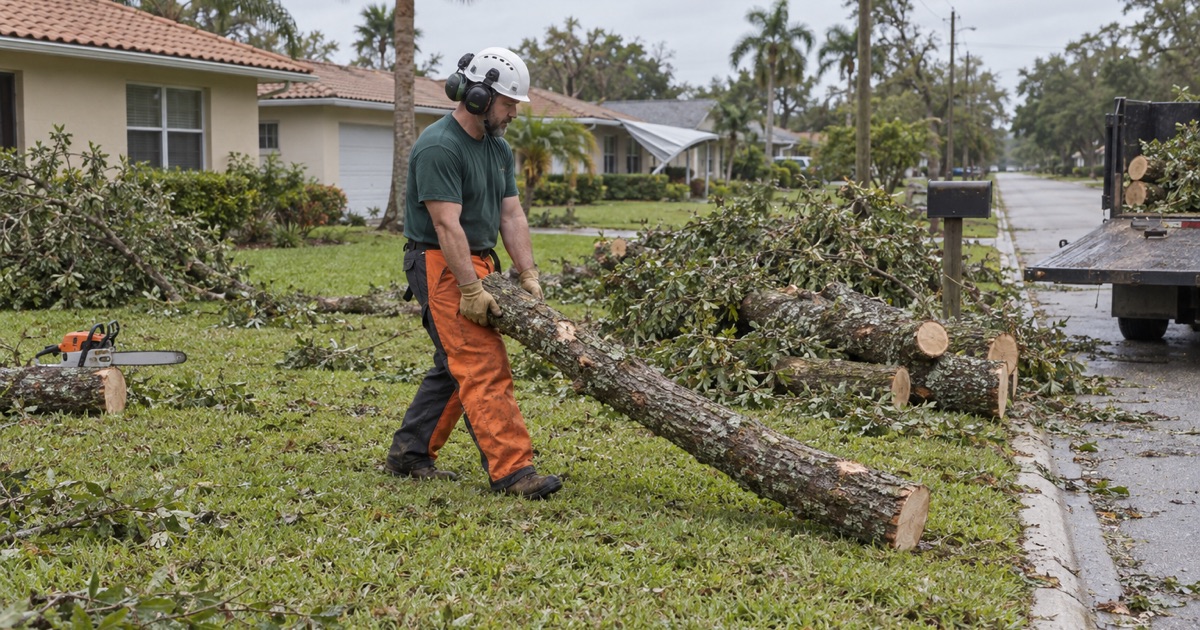
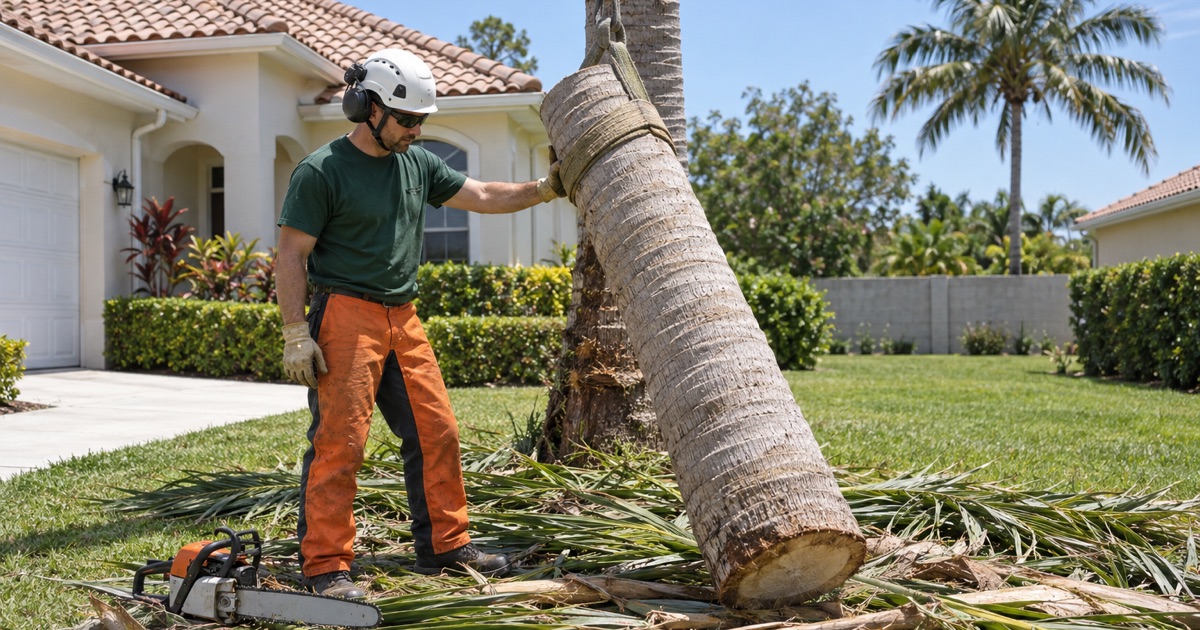
Florida Statutes section 163.045 bars a local government from requiring notice, application, approval, permit, fee or mitigation for pruning, trimming or removing a tree on residential property where the owner possesses signed documentation from an ISA-certified arborist or a Florida licensed landscape architect stating the tree poses an unacceptable risk. Subsection (3) also bars any replanting requirement. The word doing the work is possesses: the document exists before anything is cut, not after somebody objects.
Unacceptable Risk, Not Simply Dangerous
The 2022 amendment replaced the old presents-a-danger wording with a defined standard, and the definition is stricter than it sounds. Unacceptable risk means removal is the only means of practically mitigating the tree’s risk below moderate, measured against the ISA Best Management Practices Tree Risk Assessment, Second Edition, 2017. If reducing the crown, taking one limb or installing a cable gets the risk below moderate, the exemption fails and the local permit is still live.
Where the Preemption Stops: Single-Family Detached
Section 163.045 reaches residential property defined as a single-family detached building on a lot actively used for single-family residential purposes, which is a narrow door. A duplex, a townhome, an attached villa, a condominium building and a mobile home in a co-op all sit outside it, and so does the association-owned common area behind any of them. Reading the statute without its definition is how an owner cuts under an exemption they never had.
Condominiums, Townhomes and Vacant Lots
Vacant and platted-but-unbuilt lots are excluded too, along with commercial, industrial and agricultural land, which matters on a coast holding this much attached and seasonal housing. A condominium owner on the coastal strip can fall outside the permit preemption and outside the county storm debris program in the same breath. For those properties we work the ordinary permit route with the association or the manager, and we say so at estimate time.
Lee, Collier and Hendry: Three Counties, Three Answers
Lee County runs vegetation removal permitting through its Land Development Code, Collier through Land Development Code section 3.05.00, and Hendry on its own schedule, while Bonita Springs, Sanibel, Marco Island and Naples each add a municipal layer. The City of Bonita Springs permit application lists only two valid reasons to remove a tree and neither is a hazard tree, and its hurricane guidance draws the line at dead versus damaged. We work the address, not the county name.
Mangrove Trimming Is Carved Out by Name
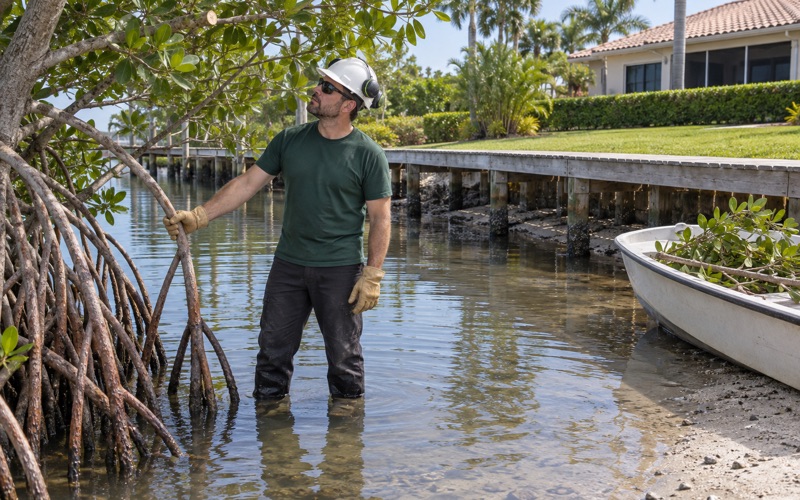
Subsection (4) of section 163.045 expressly excludes mangroves, so no arborist letter clears a mangrove of anything. Mangroves are governed by the Mangrove Trimming and Preservation Act, the state certifies professional mangrove trimmers to do the work, and cutting beyond what the act allows is an enforcement matter rather than a code violation. On a waterfront lot the mangrove fringe, the Coastal Construction Control Line and the upland trees are three separate legal questions.
A Neighbor’s Tree Over Your Roof
The general rule is that you may prune what crosses your property line, to the line, at your own expense, and you may not cross it or prune so severely that you kill the tree. What settles these disputes in practice is documentation rather than the rule: a dated condition report describing structure, defects and probable failure direction gives both owners and both insurers something to work from. We supply that report and cut only to the line.
The Written Condition Report, and What It Saves
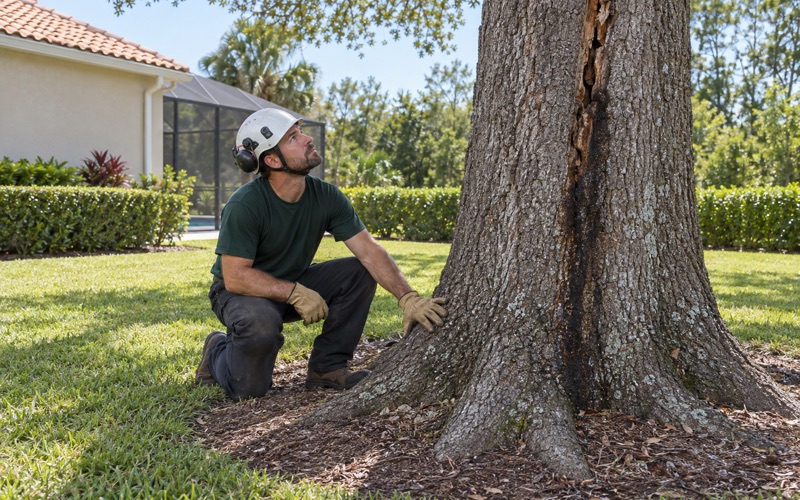
A condition report records what was standing on a given date: species, diameter, the defects found, the targets beneath, the assessment method used, and the recommendation with its reasoning. It is the document section 163.045 contemplates when signed by a qualified assessor, and it is also what an association board, an insurer or a buyer’s inspector asks for later. Removing a tree without one leaves you defending a decision with nothing but memory.
Cabling and Bracing Instead of Removal
A co-dominant union with included bark is a real defect and often a repairable one. A dynamic cable installed in the upper crown shares load between the two stems and buys years, while a subordination cut on the weaker leader shifts growth away from the union at the same time. We quote that option beside the removal whenever it honestly applies, because a customer told the truth about a fixable tree believes us about the next one.